
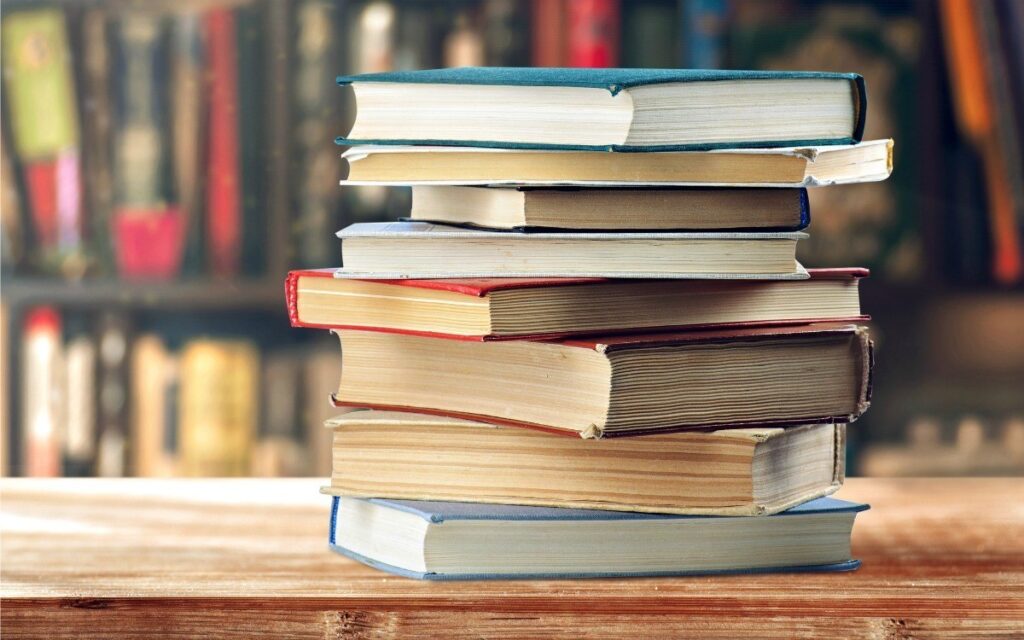
In Canadian schools textbooks are usually large, hard cover, with glossy paper, filled with beautiful pictures, drawings, many “interesting factoids”, spanning a large amount of information. With these gorgeous books, the publishers and authors think that the books are devoured by our students, and that the students read them everyday expanding their mind. I don’t think this is really the case. There are many disadvantages to these textbooks
Size: For starters, their size and weight is something of an issue. Students take many courses, and have many textbooks. Let’s say they have four classes during the day and each class requires them to have their separate textbook – that’s four textbooks they need to bring to school and back home. On top of that, the students are required to have notebooks or binders, writing utensils, lunch, etc. All this can hardly fit into a school bag. In fact, our school has a devoted room called the back-back room where students can put their giant back-backs filled with textbooks (and their laptops) during lunch, so that there is enough room in our cafeteria). The alternative is that students get these textbooks at the beginning of the year and then leave them at home for the rest of the year (and I have told my students to do this several times), but then they can’t use them at school, in class, when they should be the most useful.
Internet: All the factoids and beautiful pictures cannot surpass the internet. The internet is an endless source of such interesting facts and graphics, and it can fit more of this information and more interesting or recent information than any book can. These extras only distract the student, and even though the publisher/author had a good intention in adding these facts / graphics / pictures, these add to the bulkiness of the book, and could be easily substituted with great websites.
Price: These beautiful textbooks are very very very expensive. For the price, they better be useful, and used a lot.
Lack of explanations: A textbook should be considered a sort of reference of sorts (if a student misses a class, then I should be able to say, go to so and so page and read what you missed). Textbooks (nowadays especially) don’t have the basic necessary information in black and white. It seems the books want to make the content interesting, and in so doing they miss to concentrate on the essentials, and the explanations. (Although this is not the case with all text books. A lot of the books that I have encountered recently are very well written and if the student took the time to read it carefully, they would get a clear understanding of the content. A lot of the time, students don’t take the time to read these pages.)
What I really want from a textbook: For me, a textbook needs to add to the everyday lesson. I would like the students not to have an excuse, that the book is too large to bring to class. I want them to be compact and light. I don’t need the students to think they are beautiful, as they won’t like these books anyway, since they are “textbooks”. I want them to be affordable. I don’t need the books to have many “extras”, since I am capable of doing this myself as any teacher can. I only, above all, need them to be useful.